Why are these destinations so amazing?
Corfu
see details
Corfu
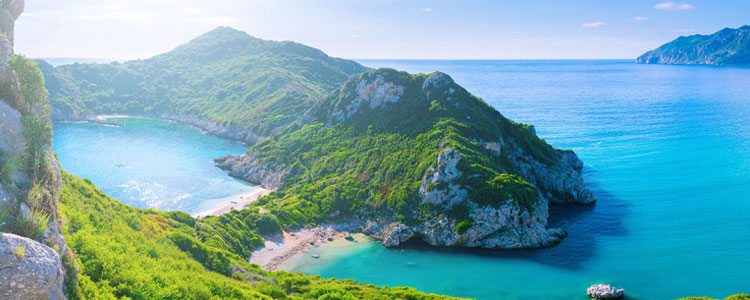
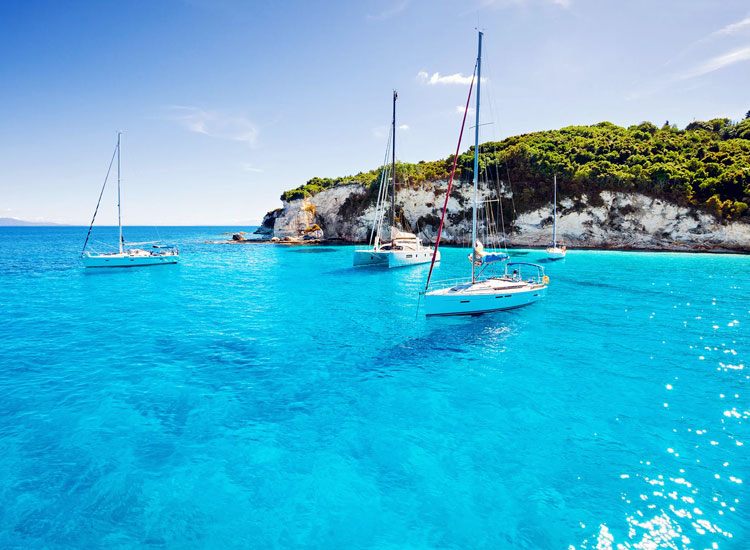
In the heart of the Adriatic Sea is Corfu, one of the Ionian Islands. The Greek island of Corfu, also known as Kerkyra, has been under the control of many different cultures and nations, giving it a cultured and fascinating history. Corfu Town is the biggest town on the island, but there are many more historic landmarks, fishing villages, religious structures and beaches that attract visitors.
Old Fortress, Corfu Town
On the easternmost point of the peninsula where Corfu Town is located stands the Old Fortress of Corfu. Known to Greeks as the Paleo Frourio, this incredible medieval structure was built in 1546 when the Venetians ruled over the island.
Kassiopi
The northeast section of Corfu is home to Kassiopi, a scenic coastal resort that is popular with travelers from around the world. Brits, in particular, gravitate to the resort’s large beaches, fantastic eateries and relaxed atmosphere. Kassiopi is said to have been founded in the third century BC, and a Byzantine fortress still stands on a hill overlooking the town and its beaches. On the pebble beach, all kinds of recreational activities are available, letting visitors enjoy parasailing, horseback riding, scuba diving and swimming.
Canal D'Amour, Sidari
On the western side of the island are several popular resort areas, most of which are busy year-round thanks to international tourism. One, called Sidari, is especially popular thanks to its proximity to a natural landmark known as the Canal de l’Amour. Accessible on foot right at one end of the beach, the Canal de l’Amour is a series of narrow inlets created by sandstone cliffs. Each of the inlets offers something unique, ranging from a pristine strip of white sand to paths that lead to gorgeous stone archways or hidden caverns.
Paleokastritsa Beach
Paleokastritsa, which translates to the place of the old castle, is a small village in the northwest of Corfu Island. Although there are several monasteries and churches of historic significance located there, the biggest attraction is the main beach. A paved promenade hugs the coast, offering the chance to walk alongside the sand and enjoy views of the water. The beach is a fantastic spot for swimming or sailing, and several restaurants are just steps from the water, serving up coffee, drinks or Corfu’s many culinary specialties.
Vlacherna Monastery
One of the most iconic landmarks, and one closely associated with the Corfu’s history, is the Vlacherna Monastery. The woman’s monastery is located on a tiny island off the coast. In order to access the island, which is almost entirely covered by the monastery itself, visitors have to walk along the narrow wharf that leads from the coast to Vlacherna. The bright white architecture of the Vlacherna Monastery, built at the end of the 17th century, stands out against the background of the blue waters surrounding it, creating an iconic image that is even more beautiful in person than in photographs.
source: www.touropia.com
Mallorca
see details
Mallorca
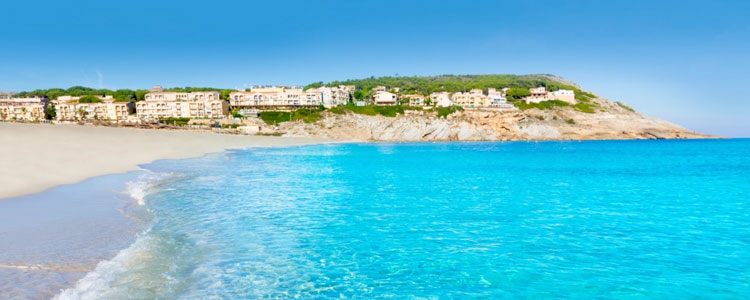
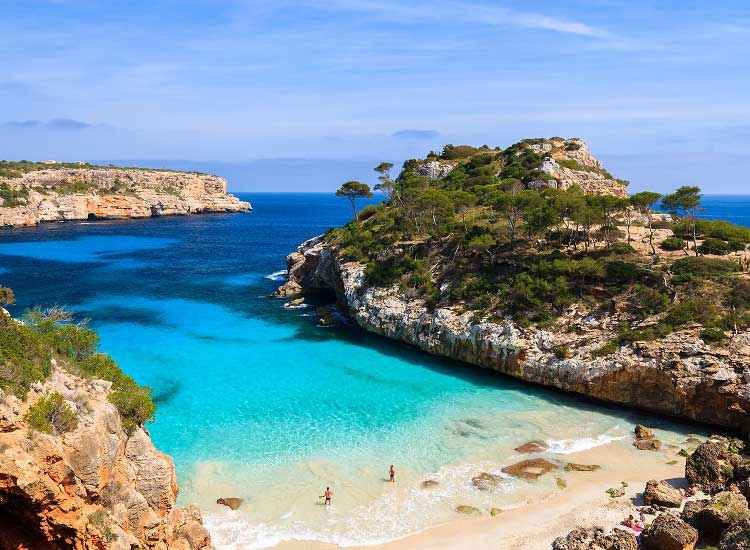
Whether you’re into sunbathing on beaches were beautiful blue Mediterranean waters caress the sand or like exploring medieval villages, Mallorca is sure to tempt your traveler’s taste buds. Mallorca is the largest island in the Balearic archipelago, drawing holiday makers from all over. The island is part of Spain, so you’ll obviously find Spanish touches here.
Palma de Mallorca
Palma de Mallorca, usually shortened to just Palma, is home to half the island’s population as befits a capital city. This charming town, with its colorful buildings, is a good place to learn about history, since it’s been settled or conquered by peoples from the Romans to the Christians. Vestiges of each culture can be found in the old town, which is famous for La Seu, a massive 13th century cathedral that was built on a mosque. Take time to wander through the old town with its narrow streets; you’ll find unique galleries, cafes and shops to tempt your tourist dollar.
Alcudia
The town of Alcudia is a very popular tourist destination in northern Mallorca. The atmosphere is family oriented, but it’s also great for anyone who likes beach activities and exploring medieval villages. Some houses in the walled village date back to the 13th century; the wall was added in the 14th century. Roman ruins can be found in front of the Church of St. Jaume.
Valldemossa
Valldemossa, a small village located in the Serra de Tramuntana, is considered one of the prettiest towns in Mallorca. Narrow cobblestone streets are flanked with old houses punctuated with lush greenery and flowers in front. Images of St. Catalina Thomas, patron saint of Mallorca, adorn many doors. Valldemossa’s most popular landmark is a 13th century Carthusian monastery, Real Cartuja de Valldemossa, because Polish composer Frederic Chopin once lived there.
Cala d'Or
With its white-washed adobe Mediterranean buildings, Cala d’Or is considered one of the nicest resorts on Mallorca’s east coast. If the number of yachts parked there is any indication, Cala d’Or is also one of the wealthiest resorts. It’s popular with yachters because of its safe harbors. With great sandy beaches, Cala d’Or is one of the best places to visit in Mallorca.
Cap de Formentor
The craggy windswept peninsula that is known as Cap de Formentor is a treat for the eyes. There is something eerily beautiful in its green and brown starkness. Cap de Formentor is the northernmost tip of Mallorca. An 1863 light house guards the end of a winding road that has been called scary to drive. Conquer your terror and you’ll be rewarded with stunning vistas from atop cliffs 400 metes (1,300 feet) high above the Mediterranean, including Mallorca’s most inaccessible beach.
Magaluf
Magaluf is another playground for European visitors. Located in southwest Mallorca, Magaluf’s white sand beach draws families as well as young adults, who frequently indulge in binge-drinking due to low booze prices. July and August are the most popular times to visit; most hotels close during the winter months. Because the resort is so popular, beaches can be crowded, but probably worth it for the tan you’ll get. Swimmers who can manage a quarter-mile swim can aim for Black Lizard Island. Located in the center of Magaluf Bay, the island is named for the numerous black lizards that scurry around.
Cala Millor
Cala Millor is a popular holiday destination for Europeans and British families on the northeast coast of Mallorca. The island’s biggest tourist hotspot has one of the best beaches on the island. Cala Millor translates as “the better bay,” which is fitting since the beach here offers clear water and soft sand, just perfect for sunbathing. Tourism officials consider Cala Millor one of the livelier resorts on the coast, but livelier may be in the eyes of the beholder. In addition to live entertainment, some British bars offer bingo and quizzes. Still, plenty of discos are available for the more active.
source: www.touropia.com
Antalya
see details
Antalya
Nestled along the beautiful Turkish Riviera on the Mediterranean coastline, Antalya is a large, vibrant city welcoming tourists with numerous resorts, hotels, bars and restaurants. Spectacular scenery frames the city with gorgeous beaches and lush green mountains dotted with ancient ruins. From swimming and sailing to mountain climbing, sightseeing and family fun, Antalya offers something for everyone. A walk around Kaleiçi, the Old Quarter, offers a step back into the city’s ancient past with views of the old city walls, Roman gates, maze-like streets and historic structures that include the Clock Tower.
Side
A major port in ancient Pamphylia and occupied by Alexander the Great in 4th century BC, Side today is a picturesque town of classic ruins and modern day resorts overlooking sandy white beaches. Located on a small peninsula, Side offers fantastic sightseeing, dining and nightlife. Its star attraction is an excavated site of ancient Hellenistic and Roman ruins that include the remnants of a colossal amphitheater and various temples. Featuring narrow streets and attractive gardens, the charming town of Side offers many restaurants ranging from delis and pizza shops to upscale dining in a variety of cuisines.
Royal Wings Hotel
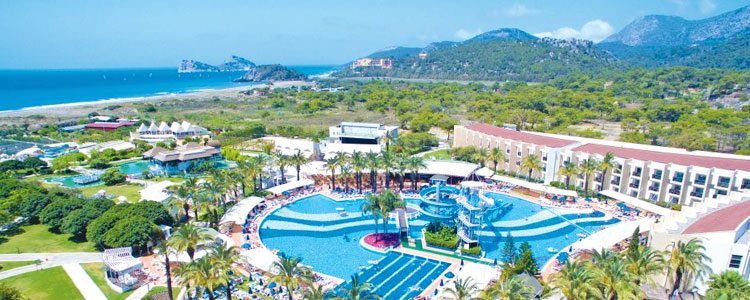
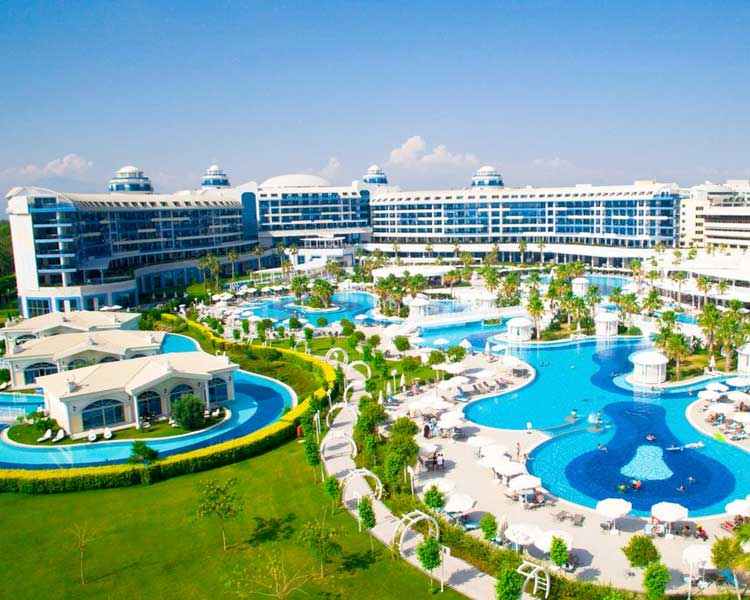
The Royal Wings Hotel, located 18 km (11 miles) from downtown Antalya, will keep guests so busy they won’t have time to go to town. Guests with children will love this hotel as it has nine waterslides. Located just a few minutes’ walk from the beach, the Royal Wings Hotel offers organized activities during the day and live shows at night. It is set on 18 acres of carefully landscaped grounds.
Calista Luxury Resort
The Calista Luxury Resort may be located an hour from the Antalya airport, but its amenities more than make up for the drive. An all-inclusive beach resort, the property offers five tennis courts that are lit for night-playing, soccer fields and a huge spa that offers a variety of relaxing treatments. Golfers will appreciate the 10 courses located within a four-mile radius. Dining here could be a challenge, however, as the resort has 10 restaurants serving a variety of international cuisines.
Barut Lara
The Barut Lara Resort Spa & Suites is showcased in an awesome setting: ocean views and carefully tended green gardens. But this beachfront property, located 10 km (6 miles) from Antalya airport, offers much more. Guests can lounge by the beach, swim in indoor and outdoor pools, visit the spa or have a Turkish bath. With a well equipped fitness room for more active guests as well as a playroom for children this is one of the best beach resorts in Turkey.
source: www.touropia.com
Zakynthos
see details
Zakynthos
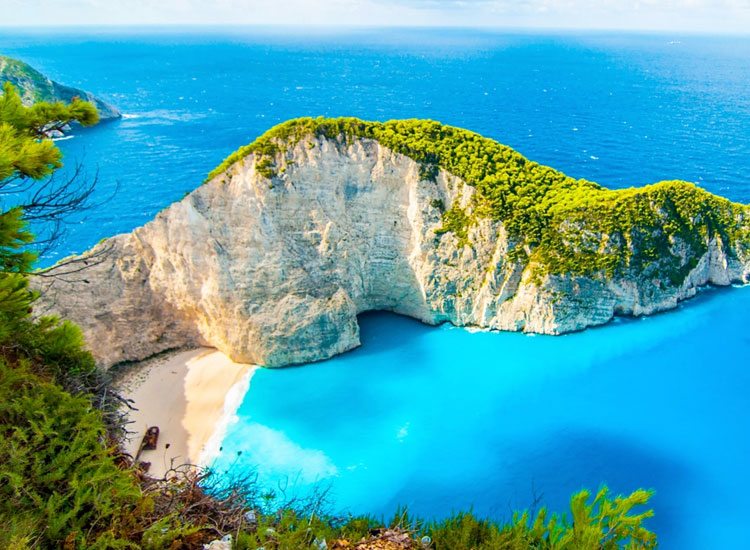
Zákynthos (Zante), lies in the Ionian Sea, only 16 kilometers off the west coast of the Peloponnese. While the island's northwest coast has steep cliffs plummeting down to rocky shores with white pebble beaches and crystal clear turquoise seas, the south is flatter with golden sand beaches.
Zákynthos Town (Zante Town)
On the island's east coast, extending in a wide arc along the gently sloping shores of a bay, Zákynthos Town is the capital of Zákynthos. Many of its Neoclassical buildings were demolished by the 1953 earthquake, but its paved streets and squares, filled with bakeries, cafés, boutiques, and jewelry stores, are still a joy to explore on foot. The town's main church, Agios Dionysios, which houses the relics of the town's patron saint, dates from 1708 and was reconstructed in 1954. For spectacular views over town and the port, go up to the village of Bohali (2.5 kilometers) to the ruined Venetian castle, set in a park with pine trees. This attraction was also largely destroyed by the earthquake, but you can still see the main gate (bearing the Lion of St. Mark, the symbol of Venice), the outer walls, and battlements.
Shipwreck beach (Navagio beach)
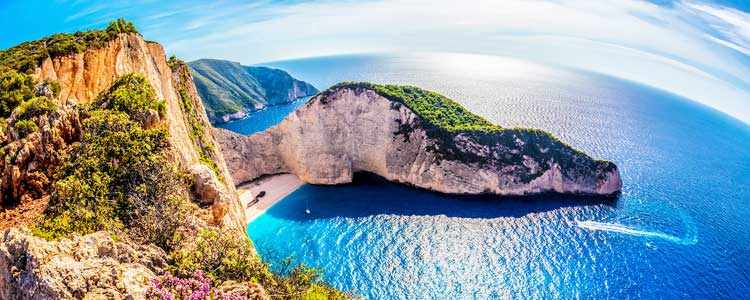
Probably the most photographed beach in Greece, and also featuring in many Greek National Tourism Organisation advertisements, Shipwreck Beach lies in the so-called Smuggler's Cove on Zakynthos' west coast. Made up of fine white pebbles backed by cliffs, the beach takes its name from the wreck of a rusty ship that was transporting contraband cigarettes and was washed up here in 1980. The beach can only be accessed from the sea - you can take a taxi-boat from the harbor at Agios Nikolaos (on the northeast coast, 32 kilometers from Zakynthos Town) or visit it as part of a round-the-island one-day boat excursion from Zakynthos Town, offered by many tour operators. The beach does get extremely busy in peak season, but is quieter after 3pm when the day trippers leave.
Keri Caves
On the southwest coast, 14 kilometers from Zákynthos Town, close to the village of Kerí, a row of dramatic caves opens directly onto a crystal clear turquoise sea. It's possible to visit the caves as part of an organised excursion, or rent a boat and go independently. You can swim into the caves and snorkel or dive to see the amazing lighting effects as the sun reflects through the water and onto the cave walls.
Blue Caves
On the northern tip of the island, at Cape Skinari, you'll find the most spectacular so-called Blue Caves. Inside, the bright blue sea reflects the color of the sky, which is mirrored off the walls of the caves and creates magical azure and sapphire light. You can visit the Blue Caves in a small glass-bottom boat, which departs from Agios Nikolaos (on the northeast coast, 32 kilometers from Zakynthos Town), or as part of the longer round-the-island cruise from Zakynthos Town.
Zakynthos National Marine Park in Laganás Bay
On the southeast coast, eight kilometers south of Zákynthos town, the wide bay of Laganás is home to several blissful stretches of sandy beach. Since the 1980s, it has been the island's top resort, with budget accommodation attracting young visitors in search of sea, sun, and fun. However, locals are now being encouraged to develop eco-tourism here, as Laganás Bay is the breeding area for the loggerhead sea turtle (Caretta caretta). An endangered species, this timid creature lays its eggs in the sand in summer, and there are an estimated 1,300 loggerhead turtles living around the bay. In 1999, the Zakynthos National Marine Park was founded to protect wildlife in Laganás Bay and to limit access to certain areas of beach during the nesting season.
source: www.planetware.com
Lefkada
see details
Lefkada
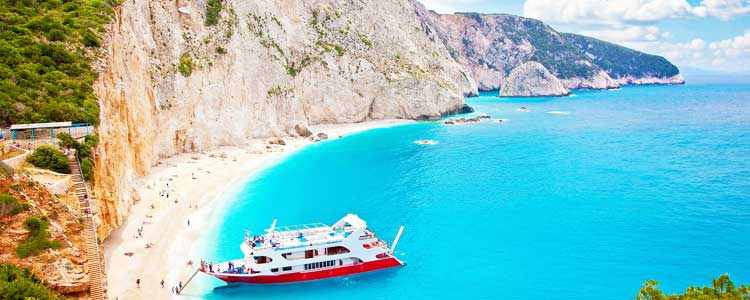
Lefkada island has surely some of the best beaches in the Mediterranean Sea. With crystal water and steep rocky surroundings, the sightseeing and beaches of Lefkada attract many visitors every summer. The beaches of Porto Katsiki, Kathisma and Egremni are of great natural beauty, while Agios Ioannis and Vassiliki are the best windsurfing spots. Nice places to see in Lefkada include the Medieval Castle of Santa Maura in the Town and the Waterfalls of Nydri. From Nydri take an excursion boat to other islands in the Ionian Sea, such as Kefalonia, Ithaca and Meganisi.
Porto Katsiki
Porto Katsiki is the most famous beach of the island and among the best in the Mediterranean. With an impressive landscape and exotic water, Porto Katsiki gets very popular in summer.
Egremni
One of the most impressive beaches of Lefkada, Egremni has an immense sandy coastline and exotic water. Visitors have to climb up and down a lot of steep steps.
Kathisma
This long beach has exotic water and sandy coastline. It is considered among the finest beaches on the island.
Agios Ioannis
The most popular beach resort on Lefkada is Agios Ioannis, located a few km west of the main town. Due to the strong winds that blow in the area, this beach is ideal for windsurfing and kitesurfing.
Vassiliki
Vassiliki is among the busiest beach resorts and the most popular windsurfing spots in Lefkada. This picturesque beach is located on the southern side of the island.
Lefkada Town
Lefkada Town is the capital and administrative centre of the island. This is the first village to see as you cross the bridge from the mainland. Although it is not as impressive as the other villages, it is still a nice town to stroll around.
Waterfalls of Nydri
This is a gorgeous waterfall that has its source up in Lefkada mountains and ends into a gorge with white rocks. Many visitors swim in its crystal clear yet cold waters.
Source: www.greeka.com
Tenerife
see details
Tenerife
The volcanic island of Tenerife offers you a rich variety of interesting places to visit, a wealth of attractions as well as some beautiful towns and villages.
From the gorgeous sandy beaches in the south, to the dramatic lunar landscape of Mount Teide, this sun-kissed island is the largest of the Canaries and is blessed with an eternal spring-like climate.
If you feel like abandoning your senses and escaping to Tenerife with its glorious blue skies, sunshine, lovely beaches, fine-dining restaurants and fantastic hotels, you have come to the right place.
There is an abundance of great destinations to choose from; here at Spain-Tenerife, we carefully select the best hotels in prime locations and at unbeatable prices!
Costa Adeje is an affluent, high class resort in the sunny south that has a rich selection of beaches, turquoise calm waters, lovely promenades lined with exclusive shops, fine-dining restaurants and elegant cocktail bars.
If you feel like sampling 5-star quality then we have two great recommendations for you in this area. Roca Nivaria Gran Hotel is a secluded retreat perfect for a peaceful and relaxing holiday. The Hotel Jardines de Nivaria overlooks the ocean and offers decadent rooms in opulent buildings, surrounded by fragrant subtropical landscaped gardens.
And now for the best 4-star hotels in Costa Adeje. The elegant Hotel Colón Guanahaní is close to one of the finest beaches in the south, Playa de Fañabé, while Hotel Jardín Tropical is located near the town of San Eugenio, which is home to the lovely Puerto Colón marina.
All of these Costa Adeje hotels are a short drive from the bustling resorts of Los Cristianos and Playa de las Américas. Both of these places are well known for their nightlife and 24-hour party atmosphere, should you wish to sample it.
The Gran Hotel Bahía del Duque Resort has to be seen to be believed. Overlooking the ocean in the discerning area of Tenerife’s southern Playa del Duque, this palatial 5-star, Gran Lujo establishment is recognised as one of the best in the south of Tenerife.
If you like to play golf, the Sandos Hotel Reserva Ambiental & Golf is located close to the verdant greens in the Golf del Sur, a popular resort for golf lovers.
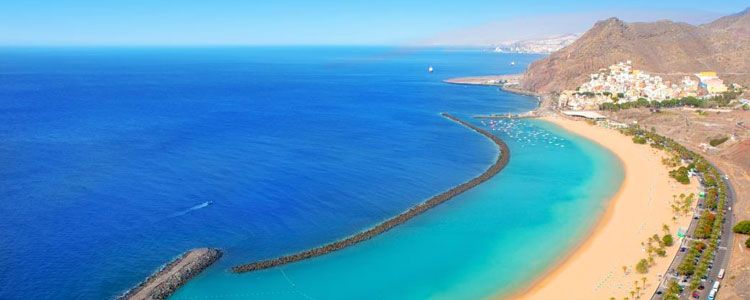
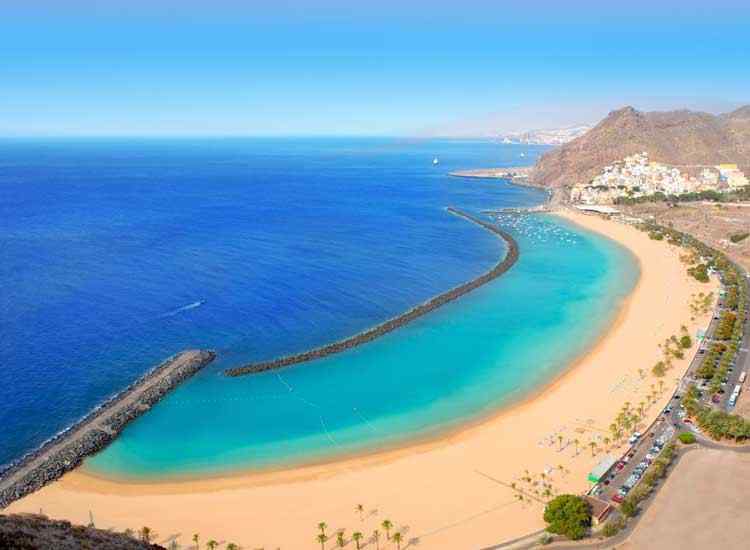
Perhaps you would like to head north to the capital city of Santa Cruz? History, culture and the arts are here to be discovered, as well as great restaurants, nightlife and the lovely beach of Playa de Las Teresitas.
Also in the north is the vibrant resort of Puerto de la Cruz, set in the beautiful landscape of the La Orotava. A short drive from the quaint cobbled streets of the old town is Hotel Botánico and The Oriental Spa Garden. This 5-star sanctuary of luxury is a wonderful haven of tranquillity, which is located close to the charming beach of Playa Jardín.
In addition, we recommend another hotel in this resort; the 4-star Hotel Beatriz Atlantis & Spa is nestled on the seafront, close to Lago Martianez, a wonderful world of swimming pools, lakes and waterfalls.
Elsewhere on the island, you’ll find captivating villages in the mountains and valleys including Masca and Güímar. And on the west coast, the dramatic cliffs of Los Gigantes are a spectacular sight.
source: www.spain-tenerife.com
Crete
see details
Crete
Stunning Crete is the largest of the Greek Islands, and also the fifth largest in the Mediterranean. It boasts gorgeous beaches and mountains and is dotted with quaint villages. During the Bronze Age, this beautiful island was the home to the Minoan civilization, which is considered to be the first advanced European civilization, so there are also many historical attractions in Crete.
Palace of Knossos
Located some 5 km (3 miles) south of Heraklion, the Palace of Knossos is the most important and best known Minoan site in Crete. Knossos is also often associated with the legend of the Athenian hero Theseus killing the Minotaur. The great palace was built gradually between 1700 and 1400 BC, with periodic rebuildings after destruction until it was devastated once and for all by fire. Knossos incorporated numerous rooms such as the Throne Room, named for a large chair that is built into the wall, facing several benches.
Chania Old Venetian Harbor
This harbor was built between the years 1320 and 1356 by the Venetians and was an important trade center until the early 20th century. The harbor could not accommodate larger ships, so the port was eventually abandoned by big vessels in favor of Souda’s harbor. Today, though, Chania’s old harbor is still used by smaller boats and yachts. The harbor’s crowning jewel is its lighthouse, which was built by the Venetians around 1595 to 1601, and is one of the oldest in the world. Most people come here to enjoy a stroll through the harbor, sip their coffee or have breakfast with a view of the lighthouse or enjoy a meal in one of the many restaurants and ouzo shops.
Balos Lagoon
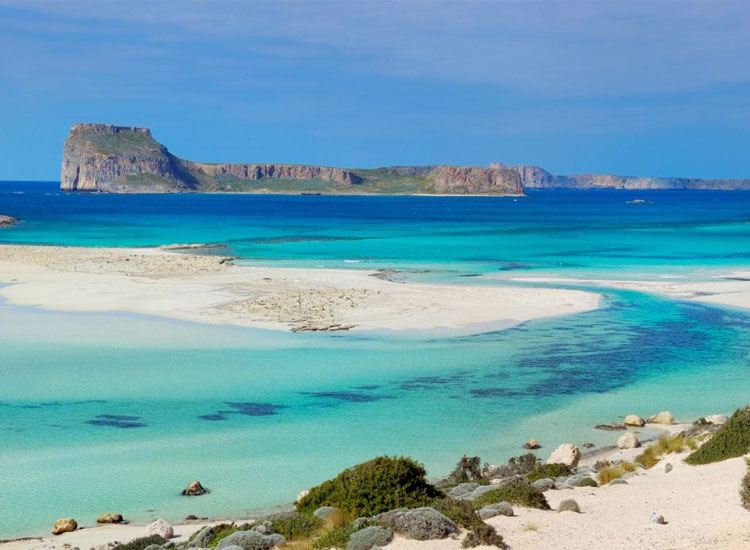
One of Crete’s most beautiful beaches, Balos Lagoon is located near the town of Kissamos. Sandwiched between the small island of Imeri Gramvousa and Crete itself, the beach is accessible by boat or car. Visitors are greeted with a stunning vista created by an outcropping of rock that is surrounded by pink sand and blue and turquoise water. This is arguably the most photographed natural attraction in Crete, which causes tourists to visit in massive numbers. The months of July and August are the busiest.
Spinalonga
Spinalonga is an island fortress on the southwestern entrance to the Gulf of Elounda. It used to be part of the nearby Peninsula Spinalonga, however in 1526, the Venetians cut a canal through it to separate the two. The island was also fortified and, for many years, was the first line of defense for Elounda. From 1903 to 1957, Spinalonga, was used as a leper colony for people from all over Greece who were suffering from the disease. Today, Spinalonga is just a short boat ride away from both Elounda and Agios Nikolaos and is popular with tourists, who come to the island to see the remnants of the abandoned leper colony, the fortress and numerous old structures. However, visits to this island are limited to a few hours, as there are no accommodations on Spinalonga.
Elafonisi Beach
While all of Crete’s beaches are beautiful, there is something very special about the beaches that can be found on the island of Elafonisi. Located in South-west Crete, Elafonisi is separated from Crete’s shores by a very shallow lagoon. In fact, it is so shallow that visitors can easily walk the 200 meters (650 feet) to the island. The waters around this island are crystal clear, and its sand ranges from sparkling white to a soft pink hue. This island’s beaches are very popular with locals and visitors, so it can be a bit crowded in some areas. Travelers who want to avoid the crowds can just walk a little farther in, where they’ll find plenty of nice, quiet spots.
Agios Nikolaos
Situated on lovely Mirabello Bay in eastern Crete, Agios Nikolaos offers visitors a mix of the modern and the traditional. It is a medium-size port town that is extremely picturesque and has some style and charm, which it exploits to the full. The town’s Lake Voulismeni, which is lined with charming small cafes and boutiques, has been the subject of a number of legends. One myth is that the goddess Athena used to bathe in this almost perfectly circular body of water. Another legend claims that this beautiful lake is bottomless. Agios Nikolaos is one of Crete’s most popular tourist destinations.
Rethymnon Old Town
The old town of Rethymnon (or Rethimno) is located in the midst of the modern city and features a rather unique blend of Venetian and Crete architecture. Rethymnon was established in 1204, after the Venetians had conquered Crete, so most of the remaining buildings in the old town area are of Venetian creation. The Old Town’s narrow streets and its small Venetian harbor are wonderful for walking, shopping, enjoying dinner at a small tavern and taking in Rethymnon’s remarkable architecture. Travelers will want to check out the nearby Fortezza Castle, which was built in 1590, and sits on a low hill in the middle of Rethymnon.
source: www.touropia.com
Malta
see details
Malta
For such a small island, Malta is absolutely packed with fascinating treasures. Breathtaking ancient sites, charming cities and beautiful beaches are just the beginning. Malta has attracted adventurers for centuries, and modern visitors have many opportunities for creating lasting memories in this enchanted place. Whether tourists want to enjoy relax by the sea, sampling Mediterranean dishes or discovering a romantic piece of the past, the top tourist attractions in Malta certainly offer something for everyone.
Hagar Qim and Mnajdra
The prehistoric temples of Hagar Qim and Mnajdra are found on the south coast of Malta, perched on top of a cliff and overlooking the islet of Filfla. The temples date back to around 3600-3200 BC. Hagar Qim consists of a series of interconnected, oval chambers with no uniform arrangement, and differs from other Maltese temples in lacking a regular trefoil plan. Mnajdra, a 700 meter (2,300 foot) walk downhill from Ħaġar Qim, is more elaborate. There are three temples side by side, each with the trefoil plan and a different orientation. An excellent visitor center offers many interactive exhibits. It is a fitting way to begin an exploration of the temples themselves. The views of the sea beyond are spectacular.
Azure Window
A breathtaking natural limestone arch with a flat top, the Azure Window is one of Gozo’s top attractions. It’s been featured in movies and television shows, and is considered an indispensable part of the Malta experience. The tourist village of Dwejra is nearby to serve the needs of visitors who scuba dive, swim and boat around the arch where it drops into the Dwejra Bay. Boat tours are available, offering plenty of opportunities to capture great pictures. The arch is visible from a great distance. Most people hike there, enjoying the extraordinary view as they go and then cooling off in the water.
Mdina
Mdina is an ancient walled city inhabited and possibly first fortified by the Phoenicians around 700 BC. Higher fortifications were added by Malta’s Arab rulers and Norman rulers. After the Knights Hospitaller arrived in the mid 1500’s the importance of Mdina as the seat of power faded steadily. What was once the old capital of Malta became the ‘silent city’, almost a ghost town. Today most of the palazzos belonging to the old aristocracy are being restored and the tourists bring life to the place, but there are only 300 inhabitants left.
Marsaxlokk
This picturesque fishing village is just a 30 minute bus ride from Valletta. Taking the bus is perhaps the best way to get there, particularly since it’s notoriously difficult to park in Marsaxlokk, especially near the waterfront. The village is very walkable, and with its colourful daily marketplace, strolling is the best way to experience it. The sight of the brightly painted luzzu fishing boats in the bay and the tranquil surroundings make this a very pleasant place to have lunch at one of the quayside restaurants.
Golden Bay
Golden Bay is one of the few sand beaches on the north west coast of Malta, and subsequently also one of the most popular. Sun beds and umbrellas are readily available for hire to ensure a comfortable day on the sand. Several beach clubs and a large hotel are located near the beach. Because it’s such a well-known beach and receives so many tourists, there are several vendors in the area offering rental equipment for various water sports. One of the best ways to enjoy this beach is at sunset when it truly lives up to its name.
Blue Lagoon Bay
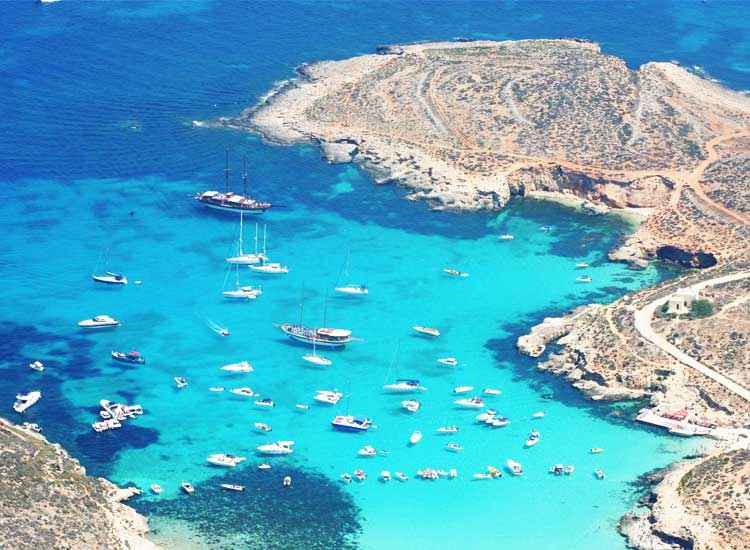
Found on the tiny island of Comino which sits between the main islands of Malta and Gozo, the Blue Lagoon is a restful getaway. The island is so small that no cars are allowed on it. It is also largely uninhabited and only one hotel is located onsite. Most people arrive on a daily basis via speed boat to claim their own section of sand on the lagoon for the day. Sparkling turquoise waters and white sand make a lovely backdrop for sunbathing, swimming, snorkeling and simply enjoying the beautiful views.
Hypogeum
The Ħal-Saflieni Hypogeum in the city of Paola is the only prehistoric underground temple in the world. The temple consists of halls, chambers and passages carved out of rock. Thought to be originally a sanctuary, it became a necropolis in prehistoric times. The complex is grouped in three levels – the upper level (3600-3300 BC), the middle level (3300-3000 BC), and the lower level (3150 -2500 BC). The deepest room in the lower level is 10.6 meters (35 ft) underground. Only a limited number of visitors are allowed entry and there can be a 2-3 weeks wait to get a ticket.
Mellieha Bay
Mellieħa Bay (also known as Għadira Bay) is the longest and most popular sandy beach in the Maltese Islands. Handy cafes sell food and drinks, making it possible to stay onsite without taking a break from the relaxation. A 15-minute walk leads up the steep hill to the rapidly developing town of Mellieħa, perched picturesquely atop a ridge. Nearby attractions include Popeye Village, the set of the 1980 film and the restored St. Agatha’s Tower from the 17th century.
source: www.touropia.com